Today, I want to share some thoughts on painting and creative practice.
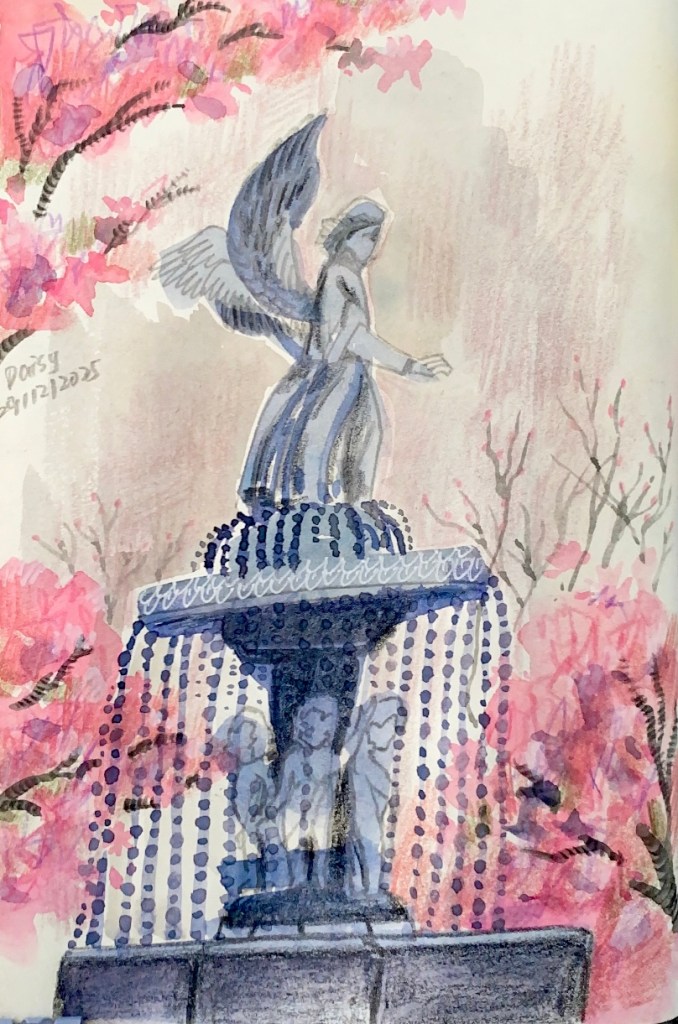
In this era, the most Important skill for today’s Artists isn’t Realism. obsessing over extreme realism is not only outdated, but it also leads you down a path that runs counter to where art is actually headed.
If we look at the history of painting—specifically the history of Western art—before the invention of the camera, painting existed to reproduce mythology, Christianity, and the lives of royalty and the bourgeoisie. The invention of photography destroyed the foundation of “representation” in painting, but at the same time, it accelerated the evolution of artistic form. From Impressionism to Fauvism, Constructivism, Surrealism, Abstract Expressionism, and Pop Art, twentieth-century art took on countless forms—none of which were concerned with how closely a painting resembled its subject.
Traditional drawing education—especially pencil sketching—originates from Western realist oil-painting training. Techniques like structural analysis and perspective were once fundamental, but within today’s artistic context and visual vocabulary, they are no longer universal.
Painting itself is a language: new vocabulary emerges with each era, and outdated vocabulary naturally fades away.
People often point to the contemporary hyperrealist Leng Jun as proof that realism is still valued in the art market. But this example is not representative—just as you cannot use Ke Jie to generalize the entire world of Go, especially when comparing him to AlphaGo. There is only one Leng Jun, just as there is only one Ke Jie.
Meanwhile, AI can now generate images that are more realistic, faster, and more “perfect” than anything we can create by hand—just as photography once threatened traditional painting. Competing with AI on realism is meaningless.
Have you ever wondered why children love animation, and why many adults still do? Beyond storytelling, animation offers visual distortion, reinvention, and imagination—an escape from reality. Art pulls us out of the real world, and that is precisely what makes it intoxicating.
That is why the true competitive edge of contemporary painting is no longer the ability to replicate reality, but the ability to create what reality does not contain. Modern artists need the ability to build dreams for their audiences.
After all, an artist’s emotions, stories, and way of seeing the world are things AI cannot replicate. So the next time you hesitate and ask yourself, “Should I make this look more realistic?” maybe the better question is: “Is there even one stroke in this painting that only I could have created?”
Painting will never become obsolete. Only the artists who remain trapped in the past will.
In the content, I’ll keep discuss this topic from the perspective of the art market and today’s audiences.
If you enjoy my content, feel free to like, subscribe, and comment. You’re also welcome to share your own thoughts and reflections on art in the comments. I’ll see you soon.


 Miss Daisy Drawing
Leave a comment