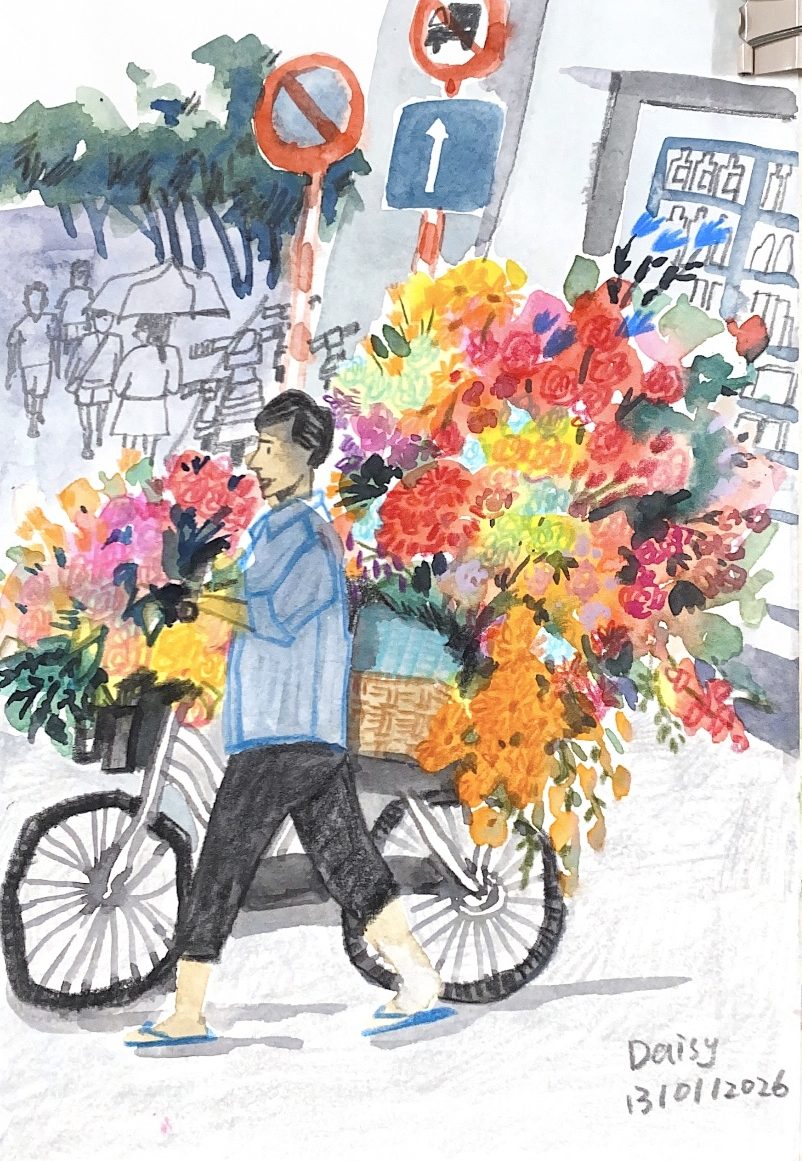
If you love drawing, or you’ve just started learning it, you might find yourself constantly switching between different mediums—colored pencils, watercolor, the iPad, and so on. Your subjects may jump from portraits to landscapes to small everyday objects. If this sounds familiar, you need to read this article. What I’m sharing today is the result of decades of learning art and falling into countless traps along the way. This passage can easily save you ten years of detours.
For Many beginners—or even hobbyists who have been drawing for a while—will face the same struggle: when you look at other artists’ work, you feel genuinely envious of their unique styles. Some artworks feel wildly imaginative, some are incredibly powerful in color, some tell strong stories, some show amazing technical skill. Some pieces look simple, yet feel warm and comforting. All of them have something special—something that makes us pause and admire. That “special something” is the artist’s style.
So, how do you develop your own artistic style? Almost every creator asks this question. But here’s what you need to know: style isn’t something you can “think” your way into. You can fabricate a style through shortcuts, but you’ll quickly get bored of it and abandon what you made up. A lasting, authentic style requires exploration and trial and error. It emerges naturally from long-term creation, shaped by your interests, your personality, and your life experiences.
So, how do you actually find your style?
First, style doesn’t start with technique—it starts with preference. Begin with the medium you love most or feel most comfortable with. Starting today, pay attention to what draws you in: the fluid unpredictability of watercolor, the texture of colored pencils, and so on. Notice which subjects feel most natural to draw, and what you want to express through them. The things that repeatedly show up in your work—that’s your preference.
Second, don’t rush to be “original.” Most artists’ styles begin through imitation. Imitation isn’t stealing—it’s part of learning the language of art. Copy the use of color, brushwork, or composition of the artists you admire. Even when you imitate, you’ll discover that part of the work still carries something uniquely yours. That “irreplaceable difference” is the seed of your style.
Third, you need volume. Style doesn’t come from thinking—it comes from making. With ten pieces, it’s hard to see any pattern. With a hundred, patterns start to appear. With a thousand, your style will grow on its own. All the imperfect pieces, ugly sketches, and failed attempts—they’re all part of the puzzle. Quantity pushes you toward quality.
Fourth, your style comes from your life. Your travels, the music you listen to, the movies you watch, the books you read, the emotions you’ve experienced, the pain and joy you’ve gone through—all of these shape the way you understand the world. The richer your life becomes, the more unique your expression will be. Art isn’t a stack of techniques—it’s a concentration of experiences. Your unique life experiences and personal insights will naturally show up in your artwork.
Fifth, style takes time—and patience. Don’t chase a style too quickly by forcing special effects or gimmicks. A manufactured style is fragile and won’t last. True style is something you can’t escape from, even when you’re not trying. It shows up in your unconscious choices, in the marks that grow naturally over the years.
The way we find our artistic style mirrors the way we find our path in life. First, record yourself frequently. Observe your interests and tendencies to identify your real preferences. Second, look for people you admire—whether they’re celebrities, artists, or business leaders—and learn from how they think and act. Third, there are no shortcuts in life. Only through trial and error can you gradually get closer to your true direction. Lastly, discovering yourself takes time. Some people have strong support—good education or financial stability—but most of us must rely on persistence and effort. Flowers don’t bloom overnight. And once you find your path, you need patience and conviction to stay on it.
 Miss Daisy Drawing
Leave a comment