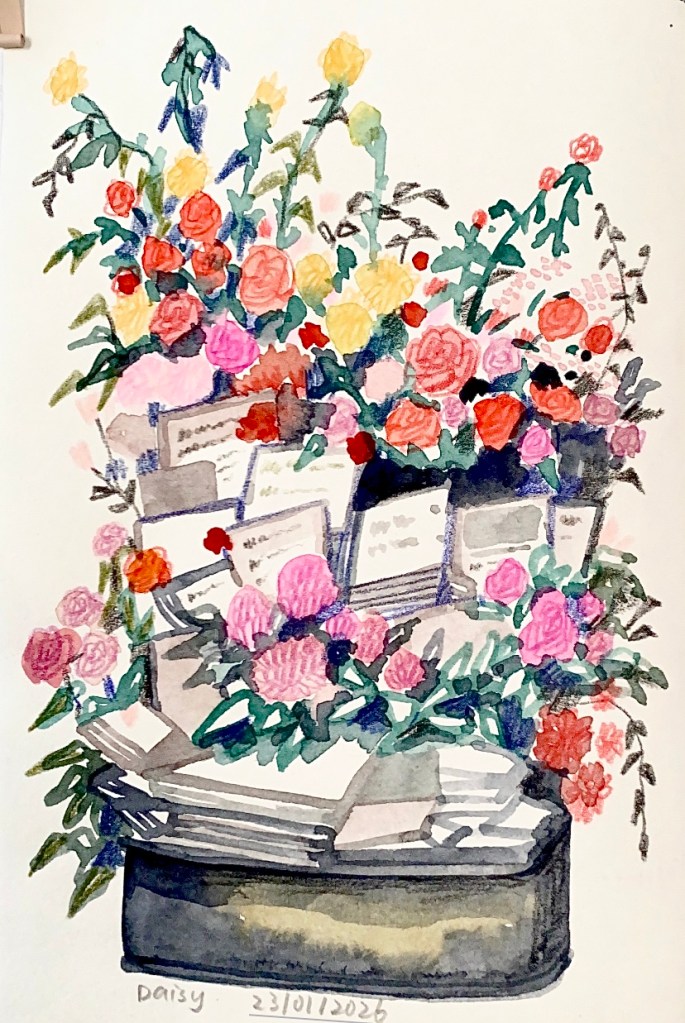
Today I want to talk about a question almost every Art hobbyist eventually asks: Why does it feel like I’ve been drawing for so long, yet I’m not improving at all?
Does this mean I have no talent? Am I just not meant for art?
I’ve taken countless detours on my own art journey. I’ve doubted myself many times. But eventually, I discovered three core truths about artistic progress. And today, I’m sharing these truths with you, no filters and no holding back.
First: unlike many other subjects, drawing does not follow a linear learning path, and it doesn’t have a single, unified standard of evaluation.
For example, I once spent a period of time teaching myself piano, and I realized something important: piano has a highly structured learning system. You start with the foundational method books, then gradually move through levels like Czerny 599, 299, 749, and beyond. Notes, rhythms, and mistakes are concrete—you can immediately hear what’s right and what’s wrong. Just like solving a math problem or spotting a spelling error, the feedback is clear, specific, and traceable.
But drawing doesn’t work like that.
A line that looks “wrong” to one viewer might be completely intentional from the artist’s perspective. When Impressionism first appeared, critics dismissed it as “unfinished scribbles” and accused it of “destroying traditional art.”
When Fauvism emerged, critics called the artists “savages” and said their canvases looked like “a child’s paint box exploded.” Yet today, these works are not only masterpieces—they changed the course of art history.
This is why learning to draw is fundamentally an act of exploration and experimentation. There is no single answer key. And you don’t need to invalidate yourself because you don’t fit someone else’s standard.
Second: the fact that modern art has no absolute standard does not mean we can skip learning the basics.
In school, we briefly learn about lines, shapes, value, color theory, composition, and so on. But most of us never truly reflect on how these visual languages relate to our own work.
Without that understanding, we end up mechanically chasing realism—“making it look like the reference”—instead of actually creating.
To grow as an artist, we must also study and reflect on what artists throughout history have already attempted. Only when we stand on the shoulders of giants can we innovate further.
Third: most people lack a habit of reviewing their work and reflecting on their mistakes.
Many artists, including my past self, get obsessed with posting drawings for likes, hoping for that quick hit of validation. There’s nothing wrong with sharing—but the problem is stopping there.
A common misconception is: “The more you draw, the better you’ll get.”
Or, “If your art isn’t improving, it’s because you’re not working hard enough.”
This is the same kind of nonsense as saying “If you’re not successful, it’s because you didn’t work hard enough.”
In reality, repeating mistakes without reflection only reinforces them.
Some people even throw away old drawings, then unknowingly make the exact same mistakes in the next piece.
Instead, we need to review our work deliberately:
What exactly improved?
What exactly fell short?
Was it composition? Layering? Edges? Could the trees, the shapes, the light be expressed differently?
Even great artists don’t create masterpieces every time. So don’t be too hard on yourself. But reflection is what consistently improves your craft—and helps you grow into your own artistic voice.
To sum up what we just talked about:, First, don’t judge yourself too quickly against some “universal standard” or fixed answer. Second, focus on learning the language of art and studying other artworks systematically—draw from a creative perspective, rather than just trying to make things look realistic. Third, reflect on your own work regularly. Analyzing what worked, what didn’t, and where you’ve improved will help you progress much further.
I’m Daisy, a storyteller who records and shares art. If you enjoy my content, feel free to like, subscribe, and comment below. You can also tell me your thoughts, your struggles, or anything art-related. I hope my words and drawings can bring you inspiration on your own creative journey.
 Miss Daisy Drawing
Leave a comment