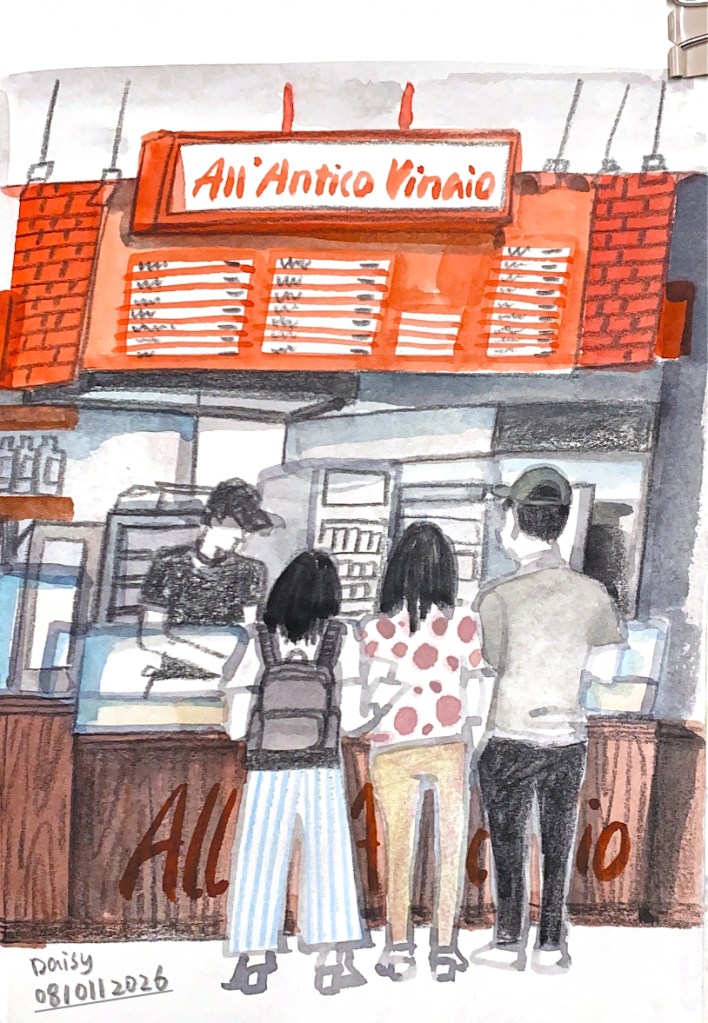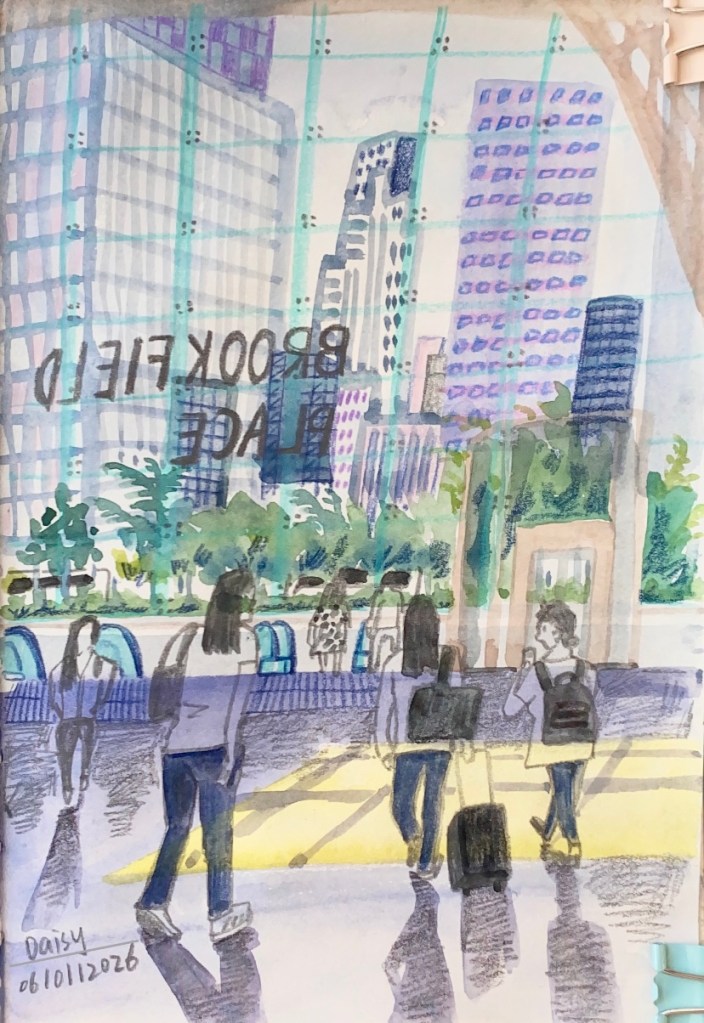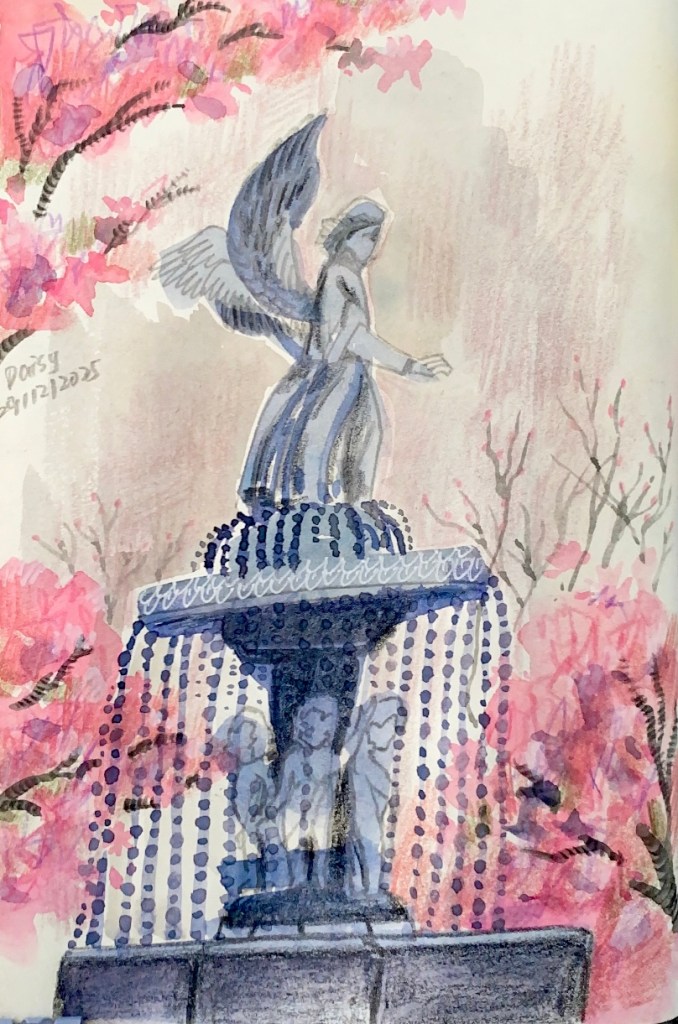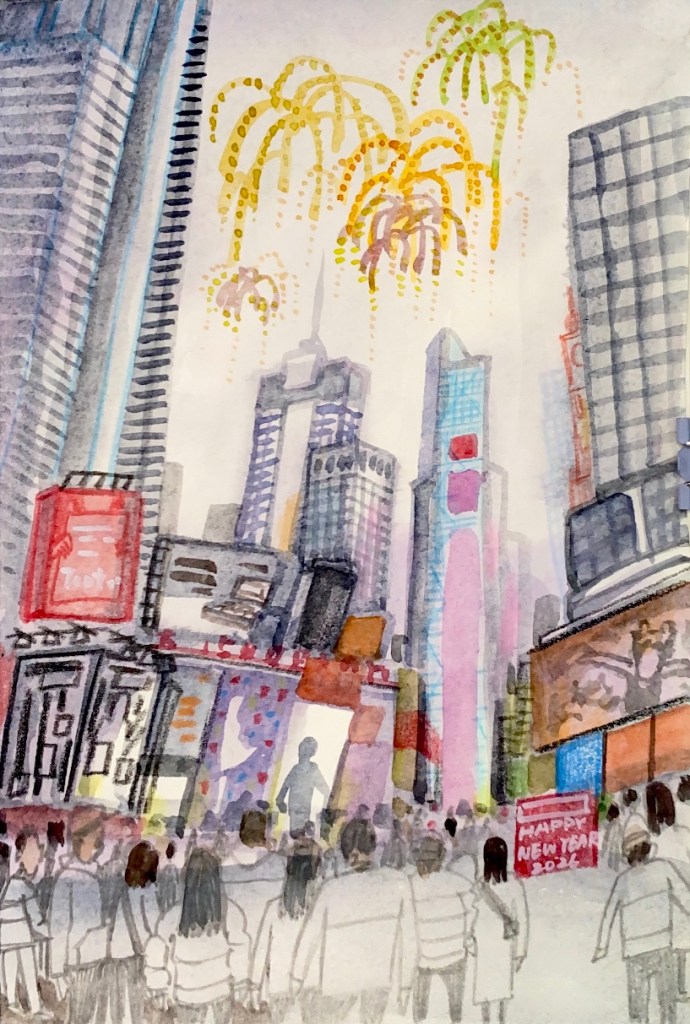
Author: Daisy Zhou

  • What Art Teaches Us That School Never Will

    There’s a common belief that studying art is a waste of time. Have you ever heard someone say, ‘Studying art is useless? In the end, you’ll only be teaching it to others in a training class’? I started a bachelor’s degree in management and then a master’s in fine arts, and along the way, I discovered some deep truths about art that no one ever talks about.

    I’m not trying to change your opinion about art; I just hope that by reading this, you can discover the meaning of learning art for yourself.

    First, most people don’t realize—and textbooks will never tell us—that painting and art have actually supported the development of modern society. I don’t want to repeat the usual phrases like “art improves your aesthetic sense” or “enhances your observation skills.” I want to show you how artistic movements, sometimes seeming far removed from daily life, have repeatedly driven societal change, influenced technology, design, and thought, and even shaped the course of human civilization.

    Did you know?

    160 years ago Impressionism opened up modern visual language and changed the way people see the world. By introducing the concept of “fleeting light and color,” Impressionists transformed how we experience painting—it’s not just about realism anymore, it’s about feeling. This shift influenced photography, film cinematography, advertising, and lighting design.

    100 years ago The Bauhaus movement in Germany emphasis on functionalism, minimalism, and geometric forms shaped industrial product design, furniture, architecture, and even city planning. The objects we use every day, our homes, and our modern sense of aesthetics all owe a lot to this movement.

    70 years ago Pop Art brought elite art into everyday life, creating mass culture and a visual language for the consumer age. Andy Warhol and Pop Art brought commercial visuals into the art world, influencing advertising, packaging, and popular culture—and shaping the era of brands and consumerism.

    Think about it: the choices we make in daily life—our phones, furniture, cars, appliances, clothing, even product packaging—are all influenced, consciously or unconsciously, by these artistic movements. If you want to understand how modern art has shaped human society, you could fill a whole book and still barely scratch the surface.

    Second, no other subject teaches you to challenge authority and create your own language like painting does. Many people who haven’t studied art assume, “Painting is just making something look like the real thing.” But this idea was overturned over 200 years ago. Modern art is no longer about replication—it’s a tool for questioning rules, breaking conventions, and inventing new forms of expression.

    Francis Bacon once wrote in The Advancement of Learning:

    “History makes a man wise; poetry makes him witty; mathematics makes him precise; natural philosophy makes him deep; ethical studies make him grave; and logic and rhetoric make him able to contend.”

    Today, painting gives us the space to challenge authority visually and create new languages. If most school subjects teach standardized answers and demand conformity, painting does the opposite—it allows you to be different, and you will never be the same as anyone else.

    People often criticize art because they’re used to uniformity and afraid of individuality.

    Third, art is a medium for self-exploration and emotional expression.

    I often say that painting isn’t just a professional art—it’s also a kind of play, and even a form of therapy. When we paint, it helps us ease anxiety, calm our worries, and release stress. Painting isn’t just about technique; it’s a way to explore ourselves.

    Especially in today’s fast-paced, technology-driven world, where anyone could face uncertainty or job instability, scrolling through videos or chasing consumerism isn’t enough—we need a way to process and soothe our emotions. Painting satisfies our creative urges, goes beyond pure utilitarianism and Materialism provides deep spiritual fulfillment. It’s an essential part of the human experience, making our life richer, meaningful, and more human.

    If you haven’t yet experienced these three incredible aspects of painting, now is the perfect time to discover the true magic of art.

    I Hope you find this content helpful. If you enjoy my content, feel free to like, subscribe, and leave a comment. You’re also welcome to share your own thoughts on art in the comment section.
  • 3 Practical Tips to Select Your Ideal Art Medium

    In my last content, How to Discover Your Unique Artistic Style I talked about how to find your own artistic style. Today, I want to continue that conversation and tackle a challenge almost every art lover faces: How do you choose the right art medium for yourself?

    Many art lovers switch mediums every once for a while. You spend some time with acrylics, then fall in love with watercolor. You practice watercolor for a while, then suddenly the iPad looks very tempting. This constant switching can become one of the biggest obstacles to developing a stable and recognizable artistic style.

    And this isn’t just a beginner problem. Even trained art students experience this.
    Oil painters fall in love with the texture of ink. Watercolor students discover printmaking and never look back. Switching mediums isn’t wrong. In fact, choosing your medium is a journey of self-understanding.

    Your personality, your temperament, and your preferences—all of these are hidden in the style you are about to create. 

    So today, I want to share three practical methods to help you choose a medium that truly fits you.

    First. Explore widely before you decide.

    Do not judge yourself “I’m not good at it” before you’ve even tried. The sensory experience each medium gives you is the most honest indicator of whether it fits you.

    Spend some time exploring different mediums: graphite, colored pencils, watercolor, markers, oil pastels, acrylic, soft pastels, ink—anything you can find.

    Pay attention to the experience: the bold colors of acrylic, the fluid unpredictability of watercolor, the tactile texture of graphite, the soft, dreamy feel of pastels. 

    Try them systematically, and document how each one makes you feel. After exploring, choose the medium that creates effects you love and one you naturally handle well.

    Second. Start with the medium you feel most comfortable with.

    Your medium doesn’t have to be expensive or trendy. It just needs to be something you can easily pick up every day—a pencil, a basic watercolor set, or acrylic on canvas.

    The more familiar you become with your medium, the easier it is to stay consistent. And consistency—not expensive supplies—is what separates amateurs from artists.

    Growth comes from steady practice, reflection, and understanding the materials in your hands.

    Lastly. iPad drawing is an extension—not a replacement.

    Digital drawing is powerful. It combines the expressive possibilities of traditional mediums with modern convenience. But for beginners, the endless options—brushes, textures, layers—can be overwhelming.

    And no matter how advanced digital tools are, they cannot fully replace the tactile, physical textures of traditional mediums.

    So if you’re new to drawing, or if you want to build a unique artistic voice, traditional mediums remain the best training ground.

    I often find connections between drawing and life—how they influence and mirror each other. I hope sharing these reflections can inspire you and your own creative journey.

  • How to Discover Your Unique Artistic Style

    If you love drawing, or you’ve just started learning it, you might find yourself constantly switching between different mediums—colored pencils, watercolor, the iPad, and so on. Your subjects may jump from portraits to landscapes to small everyday objects. If this sounds familiar, you need to read this article. What I’m sharing today is the result of decades of learning art and falling into countless traps along the way. This passage can easily save you ten years of detours.

    For Many beginners—or even hobbyists who have been drawing for a while—will face the same struggle: when you look at other artists’ work, you feel genuinely envious of their unique styles. Some artworks feel wildly imaginative, some are incredibly powerful in color, some tell strong stories, some show amazing technical skill. Some pieces look simple, yet feel warm and comforting. All of them have something special—something that makes us pause and admire. That “special something” is the artist’s style.

    So, how do you develop your own artistic style? Almost every creator asks this question. But here’s what you need to know: style isn’t something you can “think” your way into. You can fabricate a style through shortcuts, but you’ll quickly get bored of it and abandon what you made up. A lasting, authentic style requires exploration and trial and error. It emerges naturally from long-term creation, shaped by your interests, your personality, and your life experiences.

    So, how do you actually find your style?

    First, style doesn’t start with technique—it starts with preference. Begin with the medium you love most or feel most comfortable with. Starting today, pay attention to what draws you in: the fluid unpredictability of watercolor, the texture of colored pencils, and so on. Notice which subjects feel most natural to draw, and what you want to express through them. The things that repeatedly show up in your work—that’s your preference.

    Second, don’t rush to be “original.” Most artists’ styles begin through imitation. Imitation isn’t stealing—it’s part of learning the language of art. Copy the use of color, brushwork, or composition of the artists you admire. Even when you imitate, you’ll discover that part of the work still carries something uniquely yours. That “irreplaceable difference” is the seed of your style.

    Third, you need volume. Style doesn’t come from thinking—it comes from making. With ten pieces, it’s hard to see any pattern. With a hundred, patterns start to appear. With a thousand, your style will grow on its own. All the imperfect pieces, ugly sketches, and failed attempts—they’re all part of the puzzle. Quantity pushes you toward quality.

    Fourth, your style comes from your life. Your travels, the music you listen to, the movies you watch, the books you read, the emotions you’ve experienced, the pain and joy you’ve gone through—all of these shape the way you understand the world. The richer your life becomes, the more unique your expression will be. Art isn’t a stack of techniques—it’s a concentration of experiences. Your unique life experiences and personal insights will naturally show up in your artwork. 

    Fifth, style takes time—and patience. Don’t chase a style too quickly by forcing special effects or gimmicks. A manufactured style is fragile and won’t last. True style is something you can’t escape from, even when you’re not trying. It shows up in your unconscious choices, in the marks that grow naturally over the years.

    The way we find our artistic style mirrors the way we find our path in life. First, record yourself frequently. Observe your interests and tendencies to identify your real preferences. Second, look for people you admire—whether they’re celebrities, artists, or business leaders—and learn from how they think and act. Third, there are no shortcuts in life. Only through trial and error can you gradually get closer to your true direction. Lastly, discovering yourself takes time. Some people have strong support—good education or financial stability—but most of us must rely on persistence and effort. Flowers don’t bloom overnight. And once you find your path, you need patience and conviction to stay on it.

  • Lost Your Passion for Drawing? 

    A lot of people believe that the joy of drawing comes from “being good at it.” But the truth is the opposite. The more we chase perfection, the more we try to prove ourselves, the heavier drawing becomes. We compare ourselves to professional artists and illustrators, and the moment our work looks “off” or “not good enough,” we start questioning everything—our talent, our potential, even whether we should keep drawing at all.

    This mindset shows up not only in art, but also whenever we try something new. So today, I want to share how you can truly rediscover the joy of drawing—how to start anything with zero pressure and learn to enjoy the process again.

    First, you need to allow yourself to “draw badly.” Allow yourself to make mistakes. It sounds simple, but for most of us, it’s incredibly difficult. Especially in our culture, where school, family, and society don’t really give us room to fail. Many of us grow up walking a path that seems to demand “the correct answer” in everything we do, but that path is often filled with pressure and anxiety.

    But drawing isn’t just a professional skill. It’s also a game, a visual exploration, a way to enter a flow state, and even a form of therapy. That’s why you need to “demystify” drawing—or anything else you want to pursue. You’re not facing a monster. You’re facing a gentle little rabbit.

    Second, put aside the grand goal of finishing a large, polished, complex artwork. Start with the smallest possible action. Sketch what’s around you—draw a tree, a cup, a wash of watercolor, or even just a few lines. None of these need to become finished pieces. These tiny practices remind you that sometimes starting matters more than finishing.

    Third, treat drawing like an adventure—a treasure hunt. Maybe you’ve had phases when you drew mindlessly, constantly producing work but never improving. That’s because you weren’t exploring. Exploration means asking: Which colors feel most harmonious together? How do you paint the glow light in the night time? How do different leaves behave on different trees? What colors define autumn leaves? How do you paint winter snow? Does every object has to be its original color?

    Exploration comes with failures, but also surprises. And trust me—you’ll be amazed and proud of the unique effects you discover on your own.

    And isn’t life itself an adventure as well? Give yourself more patience. Anything you love is worth exploring again and again.

    When you let go of judgment, comparison, and the pressure to “be good,” you’ll realize something: the joy of drawing never disappeared. Beyond the roles and responsibilities that society and family place on us, life still holds countless sources of meaning and joy waiting for us to unlock. They were simply hidden behind all the pressure.

    What you need now is just a little space for yourself each day—enough for drawing to illuminate your life again.

    If you enjoy my content, feel free to like, subscribe, and leave a comment. You’re also welcome to share your own thoughts on art in the comment section.

    I’m Daisy, a storyteller who records and shares art. I hope my words and drawings inspire your own creative journey.

  • Will AI Replace Painting? 

    Make sure you watch this content to the end — it might completely change the way you see AI, and it might even reveal a new career path for you.

    Recently, I watched a talk where the well-known contemporary artist Xu Bing discussed the impact of AI on painting. After watching it, I was genuinely excited — and honestly a little honored — to realize that many of my thoughts align closely with his.

    So today, I want to take you deeper into this question: Will AI replace painting?

    My answer is: Yes… and No.

    Let’s start with Yes.

    If we define painting simply as “image generation,” then AI can absolutely do that — faster, cheaper, with more styles, and with endless variation.

    When painting is reduced to pure “visual production,” AI is incomparable. It can generate a stunning image in just a few seconds.

    In this sense, AI will replace forms of painting that rely mainly on technical skill and execution. Commercial illustration, game concept art, environment design, poster drafts, character development — AI is already taking over most of the basic production work.

    And in fact, that was one of the original intentions behind AI: to free humans from repetitive labor.

    Now let’s talk about the No.

    If we understand painting as a form of expression, a way of thinking, a process of interacting with the world — then AI can never replace human beings.

    First, emotionally.

    Painting, music, dance — these art forms are fundamental to what separates humans from animals. They come from our need to explore emotion, experience, and meaning.

    We are born wanting to express ourselves. Painting is one of the ways we externalize our inner world, and as long as humans exist, this impulse will exist.

    Why do we cry, or feel moved, or feel awe in front of certain artworks?
    Because in the image, in the brushstrokes, in the texture of the pigment, we can sense the artist’s living experience — their emotions, insights, confusion, curiosity, and exploration.

    This is something AI cannot achieve, even at its peak. Work with a human heartbeat, human perspective, and human worldview… still belongs only to humans.

    Second, initiative

    Yes, AI can generate the visuals we need for commercial work — the illustrations and concepts I mentioned earlier. But a human still has to decide the scene, the character traits, the aesthetic direction, the message, the intention.

    At least for now, AI needs human guidance. Humans remain the creators.

    And what we’re experiencing today is no different from the major technological revolutions in history.Every revolution reshapes labor and industry. Old roles disappear, and new ones emerge.

    In the First Industrial Revolution, handcraft labor declined, and factory workers and railway builders emerged.

    In the Second, horse-powered transport disappeared, replaced by electrical engineers and communication workers.

    In the Third, traditional typesetting and editing declined, replaced by programmers, UI/UX designers, and digital roles.

    And in the Fourth — the AI revolution we are living through — roles like copywriters, basic image producers, and some education jobs are shrinking; while AI trainers, independent “super creators,” and digital-asset professions are emerging.

    If you look closely at each revolution, you’ll notice a pattern:

    Human value keeps shifting upward — from physical labor to skill, to intellectual work, and now to pure creativity and imagination.

    This is why we need to shift our mindset.

    Seeing AI as a threat to human survival only leads to resistance — and that means rejecting the next wave of progress.

    Today’s AI isn’t here to destroy us. It’s a tool that pushes each of us to become more imaginative, more creative, and more initiative.

    And these abilities thrive in artistic practices — painting, music, dance, writing, and every form of creation. So painting will never disappear as long as human exist. 

    If you enjoy my content, feel free to like, subscribe, and comment. You’re also welcome to share your own thoughts and reflections on art in the comments.

    I’m Daisy, a storyteller who records and shares art. I hope my words and drawings inspire your own creative journey.


  • The Most Important Skill for Today’s Artists Isn’t Realism II

    Building on the previous content The Most Important Skill for Today’s Artists Isn’t Realism  I – last time we looked at the limitations of hyper-realistic painting from the perspective of art history and the artist’s creative process.

    In this episode, I want to shift to the art market and the audience, and explore why, today, the pursuit of extreme realism isn’t just outdated, but may actually run against the direction of our time.

    Let’s start with a simple question:

    If you wanted to hang a painting in your home, would you choose a highly realistic portrait or a traditional landscape Painting?

    I believe most young people wouldn’t choose either.

    And the reason is pretty simple.

    No matter what your interior design style is, realistic paintings and modern home aesthetics belong to two completely different visual languages. Put them together and there’s a subtle, indescribable sense of mismatch.

    That’s why many people are more inclined to choose an abstract or geometric piece—even if they can’t understand it at all—as home décor.

    Modern viewers actually gravitate toward abstract, geometric, and ambiguous works.

    Even when the content is unclear, the artwork fits the space. It fits the mood.
    Its functional role matters more than its storytelling role.

    But why is that?

    It’s because our entire visual environment—architecture, furniture, product design—has been deeply influenced by the Bauhaus design movement of early 20th-century Germany.

    Bauhaus emphasized one core principle: “form follows function.”
    Meaning: function comes first, form and decoration come second.

    The high-rise buildings we see everywhere today—dominated by straight lines and almost zero ornamentation—are direct results of this philosophy.

    To accommodate more people and improve spatial efficiency, simplicity became the mainstream aesthetic.

    And Scandinavian furniture, IKEA’s clean lines, all those minimalist, functional designs—they are everyday extensions of Bauhaus thinking.

    Once you understand this, it becomes clear why today’s art market favors decorative, highly stylized works over hyper-realistic figurative paintings.

    Of course, every style has its own audience. This isn’t a value judgment, but a trend analysis: what kinds of works are more likely to be chosen and collected by the general public.

    So what do today’s art audience actually favor ?

    In an era dominated by short-form videos, endless visual feeds, and decreasing attention spans, what grabs people first is always form, not content.

    Or, you could say that content itself becomes part of the form.

    In today’s visual culture, the two are almost inseparable.

    In the next content, I’ll talk about why AI will not truly replace painting.

    I’m Daisy, a storyteller who loves and shares art. I hope my words and drawings inspire your own creative journey .

  • The Most Important Skill for Today’s Artists Isn’t Realism I

    Today, I want to share some thoughts on painting and creative practice.

    In this era, the most Important skill for today’s Artists isn’t Realism. obsessing over extreme realism is not only outdated, but it also leads you down a path that runs counter to where art is actually headed.

    If we look at the history of painting—specifically the history of Western art—before the invention of the camera, painting existed to reproduce mythology, Christianity, and the lives of royalty and the bourgeoisie. The invention of photography destroyed the foundation of “representation” in painting, but at the same time, it accelerated the evolution of artistic form. From Impressionism to Fauvism, Constructivism, Surrealism, Abstract Expressionism, and Pop Art, twentieth-century art took on countless forms—none of which were concerned with how closely a painting resembled its subject.

    Traditional drawing education—especially pencil sketching—originates from Western realist oil-painting training. Techniques like structural analysis and perspective were once fundamental, but within today’s artistic context and visual vocabulary, they are no longer universal.

    Painting itself is a language: new vocabulary emerges with each era, and outdated vocabulary naturally fades away.

    People often point to the contemporary hyperrealist Leng Jun as proof that realism is still valued in the art market. But this example is not representative—just as you cannot use Ke Jie to generalize the entire world of Go, especially when comparing him to AlphaGo. There is only one Leng Jun, just as there is only one Ke Jie.

    Meanwhile, AI can now generate images that are more realistic, faster, and more “perfect” than anything we can create by hand—just as photography once threatened traditional painting. Competing with AI on realism is meaningless.

    Have you ever wondered why children love animation, and why many adults still do? Beyond storytelling, animation offers visual distortion, reinvention, and imagination—an escape from reality. Art pulls us out of the real world, and that is precisely what makes it intoxicating.

    That is why the true competitive edge of contemporary painting is no longer the ability to replicate reality, but the ability to create what reality does not contain. Modern artists need the ability to build dreams for their audiences.

    After all, an artist’s emotions, stories, and way of seeing the world are things AI cannot replicate. So the next time you hesitate and ask yourself, “Should I make this look more realistic?” maybe the better question is: “Is there even one stroke in this painting that only I could have created?”

    Painting will never become obsolete. Only the artists who remain trapped in the past will.

    In the content, I’ll keep discuss this topic from the perspective of the art market and today’s audiences.

    If you enjoy my content, feel free to like, subscribe, and comment. You’re also welcome to share your own thoughts and reflections on art in the comments. I’ll see you soon.

  • 2025: The Year I Embraced My Artistic Passion

    As 2025 comes to a close, I’ve found my true passion.

    A long-time friend recently left a comment under one of my videos and asked me, “Why art?”Especially when art, at least for now, brings me no money, no stability, no tangible return. So why art?

    “In the first year of my master’s program, I listened to a talk by a musician who played a very niche instrument. When someone in the audience asked her why she chose to stick with that instrument, her answer was simple and direct: ‘Because it’s the only thing I know how to do.’

    That answer hit me deeply.

    In my twenties, I naïvely believed I had endless time and endless choices.
    But as I entered my thirties, I slowly realized that the most precious thing a person has is time. And the older I get, the more I feel how little time each day truly belongs to me.

    Instead of looking everywhere, it’s better to choose one thing and go all in.


    This seemingly simple truth took me a quarter of my life to understand.

    In 2025, my family and I renovated our garage and turned it into my art studio. I got my first student here in Melbourne.I started my another social media account and gained nearly 4,000 followers in just half a year. Now I’m branching out to YouTube, Instagram, and TikTok.

    I know—and the data clearly tells me—that this field is already very crowded. But that’s okay. Because at this point in my life, I’ve finally learned the one “cheat code” for this game called life:

    Dreams don’t come from imagining.They come from doing.

    As 2025 comes to an end, I feel like I’ve finally found true Passion.


    I’ve found a place to put all the experiences and lessons I’ve carried over the years.

    I love everything I’m doing. I love art, and I love sharing it with others through my own perspective and practice.

    And before I finish, I want to share a passage from Steve Jobs—a piece that has inspired me for years.

    “You can’t connect the dots looking forward; you can only connect them looking backwards. So you have to trust that the dots will somehow connect in your future. You have to trust in something — your gut, destiny, life, karma, whatever. This approach has never let me down, and it has made all the difference in my life.”


    Happy New Year! I truly wish that my words and arts can bring a positive impact around. I wish everyone who is browsing my website all the best in 2026.  

  • Learn Art Without School: A New Perspective

    You don’t need to attend an art school to learn art.

    Screenshot

    Today I want to share a viewpoint that goes completely against the usual expectations: you don’t need to go to an art school to learn art, and you don’t need to go to university to learn how to make money. In this era, “learning” and “school” are two entirely different things.

    Learning is something you do for yourself. You learn what you’re genuinely interested in, and what will actually benefit you.

    School, on the other hand, is a system. Beyond teaching students, it also exists to provide employment and maintain social stability. Take content creation as an example: for most people today, it’s one of the most accessible and practical career paths. But do you really need a university degree in media studies to become a content creator? When it comes to making content, whose lessons are more valuable—top creators whose videos have millions of views , or university professors? People who benefit from staying inside the system will never point this out.

    A lot of people still treat ‘school’ as if it were the whole definition of learning—as if you can only study art by getting into an art academy, or only become employable by earning a university degree. But that mindset is completely out of touch with how the world works today.

    First, the internet now offers more resources than any other time in history. You can view high-quality images of original artworks, listen to open courses from leaders across different industries, follow your favorite artists, or join online communities where people motivate each other and stay accountable. Learning—whether it’s art or most fields that don’t require strict technical certification, such as languages or management—does not need to happen inside a traditional institution.

    Second, this era demands that we understand ourselves more than ever. You need to use every tool around you—reading, writing, and the vast information available online—to discover your strengths and direction. Education today is shifting toward “self-education.” We all have to move from being passively guided to being self-driven, from chasing credentials to building real capability.

    Don’t let the belief that “you must go to school to gain a skill” limit you. As long as you keep practicing, keep learning, and keep creating, you can grow anywhere—and it’s never too late to start.

    Stop tying your growth to school, and stop letting others define your future. The right to learn is in your own hands, and the only person who can truly determine how far you go is you.

  • Why Your Sketchbook is More Than Just a Doodle Pad

    A lot of people think a sketchbook is just for doodling or scribbling, but it is far more important than it seems.


    If painting is a form of expression, then a sketchbook is your truest, most unfiltered “visual diary.”

    It is a place that accepts you without conditions. In your sketchbook, you can mess up, draw badly, get proportions wrong, make things look chaotic, or even draw something that looks nothing like what you intended. It won’t judge you. It won’t pressure you. It is like a gentle therapist that quietly receives everything you pour into it.

    So what exactly does a sketchbook do for us?

    First, it helps us record our lives.


    As a “visual diary,” your sketchbook captures your daily ideas, moods, inspirations, and observations. Every stroke and every page carries your personal imprint. Over time, you’ll notice it reveals the parts of you that are hidden deep inside—pieces you may have never expressed before.

    Second, it helps us overcome perfectionism.


    In a sketchbook, you do not need to carry the burden of creating a beautiful, finished artwork. You can fail, experiment, play, and make mistakes. This freedom—free from rules and expectations—releases a tremendous amount of imagination and creativity that perfectionism often suppresses.

    Third, it strengthens our observation and improves our skills.


    Nothing trains your artistic abilities as comprehensively as sketching. A sketchbook is like practicing scales in music; the daily repetitions gradually help you understand and master the “notes” of drawing—line, structure, light, shadow, and color.You stop simply “seeing” and start “understanding”: Where is the light coming from? Why does the hand bend this way? Why does this composition feel balanced? How do these colors interact?Your eye becomes sharper, one sketch at a time.

    And finally, it helps you discover your artistic style.


    All the things you hesitate to try in a polished piece—different lines, quicker strokes, unusual compositions, new ideas—you can explore freely in your sketchbook. Over time, these spontaneous marks reveal your preferences, rhythms, and artistic temperament. This is where your style begins to take shape.

    If you don’t have a sketchbook yet, you might be missing a space where you’re allowed to be imperfect.


    If you already have one, give it more pages, more chances, more of your world.


    As the new year begins, start a sketchbook for yourself. Fill it for a year, and see how much you transform from the first page to the last.