I’ve been watching the Winter Olympics recently, and I keep getting blown away by the athletes’ spirit and determination. Especially Su Yiming in snowboarding and Eileen Gu in freestyle skiing. They both won Olympic gold at just 17 or 18 years old. But what inspires me even more is what happened after their success—the setbacks, the injuries, the moments of self-doubt—and how they still managed to stand back up, return to their sport, and push themselves even further.
Eileen Gu’s discipline and self-reflection throughout her training are particularly striking. Setting aside the controversy around being born in the U.S. and competing for China, her love for skiing and her reflections on growth are truly worth learning from.
Maybe you’ve also noticed this: people who have hobbies—kids or adults—often carry a unique kind of charm. At first, we might be drawn to their talent, but what really earns our respect is their willingness to commit to something that doesn’t give quick rewards. Their focus, their patience through countless failures, and the skill that slowly builds over time… those things always move us.
Today, I want to explore a question from the perspective of neuroscience and psychology: Why do we need a hobby we can continuously improve at? Whether it’s painting, writing, music, sports, or other creative activities—why do the most well-educated families encourage their children to pursue hobbies, instead of just drilling tests?
First, let’s look at the most fundamental layer: the brain.
From a neuroscience perspective, a skill-based hobby can literally reshape our brain structure.
Most people think dopamine is just the “happy chemical,” but that’s a misunderstanding. Research dating back to 1989 shows that pleasure is actually controlled by hedonic hotspots in the brain—not dopamine. Dopamine’s real function is motivation and behavioral drive. When we practice, improve, and receive positive feedback, dopamine activates our reward circuit, making us want to keep going.
This explains why the happiness we get from binge-watching, scrolling videos, or drinking milk tea is so short-lived—while a hobby that we can improve at can fundamentally change our mindset and temperament.
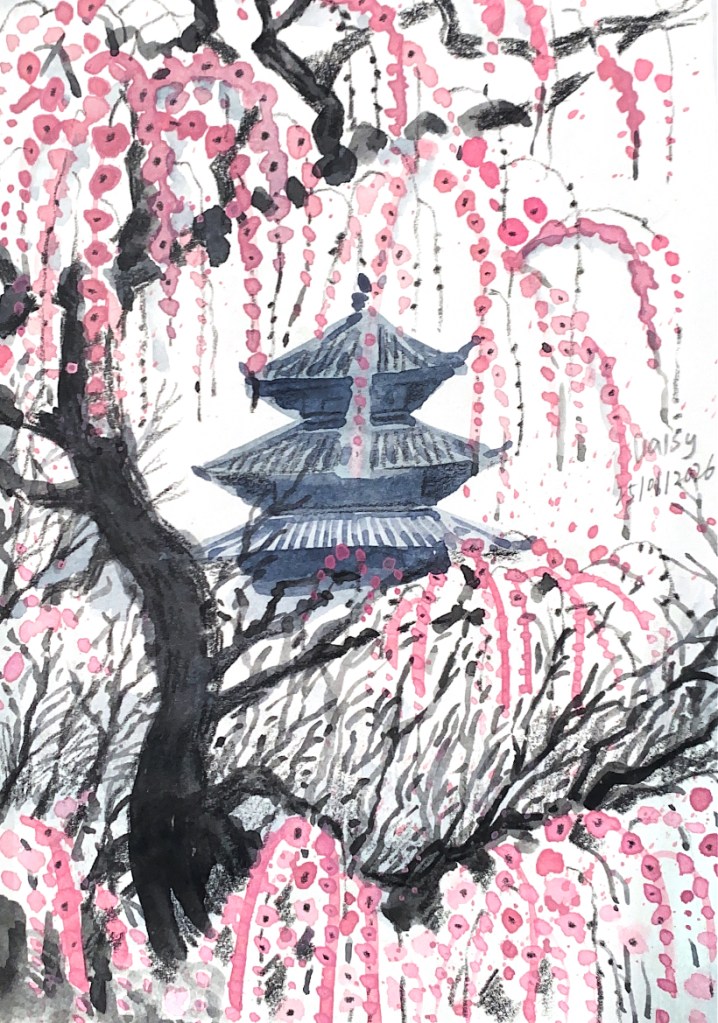
Painting strengthens the visual and motor cortices and the hippocampus.
Learning an instrument strengthens the auditory cortex and motor integration.
Sports enhance the prefrontal cortex responsible for decision-making and thecerebellum responsible for coordination.
In short: the more we improve at our hobby, the stronger our brain becomes.
Secondly, from a psychological and philosophical perspective, hobbies help us reflect on ourselves. This is an incredibly important aspect that most people overlook.
A hobby is never just about technique. At its core, it’s a psychological activity.
For example, in painting:
– A perfectionist will hesitate and repeatedly revise.
– A people-pleaser will choose styles that “everyone likes.”
– Someone with low self-esteem will criticize themselves constantly while practicing.
No matter what the hobby is, it will eventually reveal your inner patterns. Competitive sports test psychological resilience. Music and art ultimately express emotion rather than technique.
How we come to understand ourselves, gain self-awareness, and grow through our hobby—that is the true essence of having one.
Finally, in a chaotic, fast-changing, information-overloaded world, a hobby helps us build a stable sense of identity. Maybe you are “someone who paints.”“someone who runs.”“someone who writies.”“someone who creates.”
This identity is grounded, self-consistent, and can stay with us for a lifetime.
People with hobbies are less likely to be overwhelmed by endless information or fall into emptiness, confusion, or anxiety.
A hobby you can grow in is like a solid anchor—a stable pathway toward meaning. All it needs is your time and passion. A slightly steadier line, a cleaner sound, a smoother run… These small forms of self-generated feedback slowly build us into confident, grounded individuals.
I hope everyone who is reading this passage can find you own anchor—a hobby you can continue to grow in soon.
 Miss Daisy Drawing