Today, I want to introduce you to an artist we all think we know, but perhaps don’t know as well as we think we do — Vincent van Gogh.
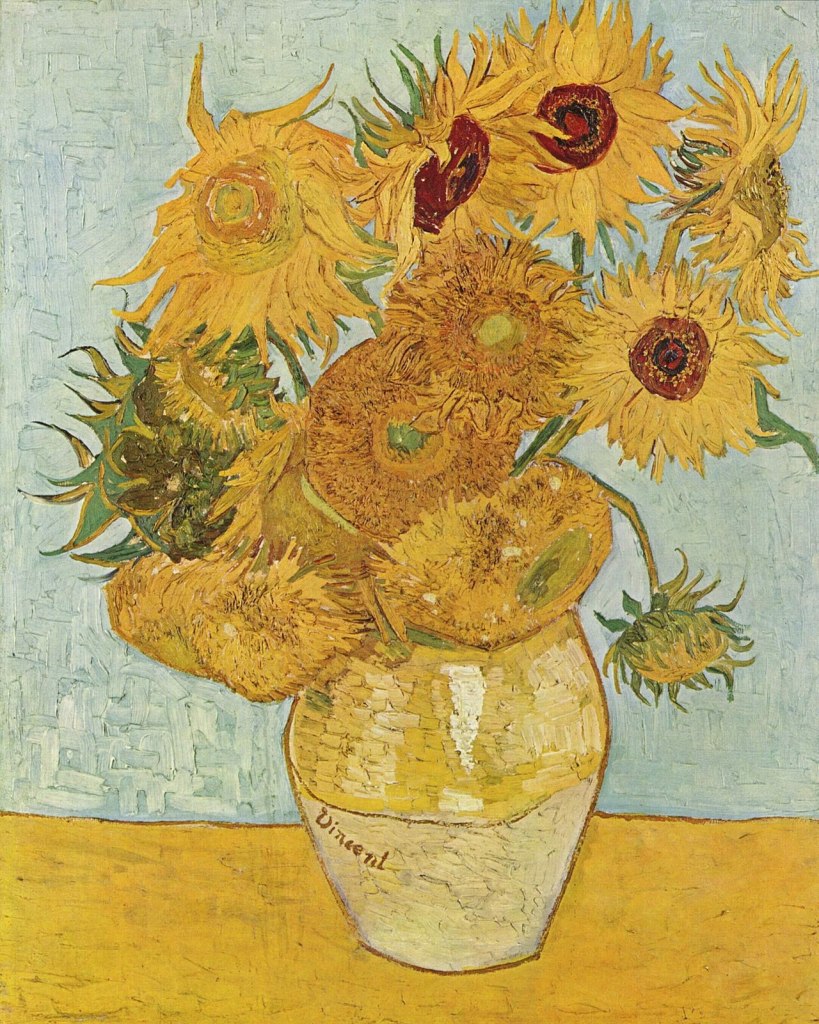
We’ve all seen The Starry Night, Sunflowers, Wheatfield with Crows, Irises, and so many of his other famous works. His paintings have become part of our everyday visual culture. We see them on computer wallpapers, notebook covers, scarves, and countless other products. We love the vibrant colors of Van Gogh’s paintings. We love his thick, expressive brushstrokes. But there is another side of Van Gogh’s art that is often overlooked — and it can be found in his drawings and sketches.
Today, I want to use Van Gogh’s drawings to explore three questions:
First, what exactly is drawing?
Second, why are Van Gogh’s drawings still so underrated?
And third, how should we actually learn to draw today?
From the Renaissance onward, drawing became one of the most important ways for artists to observe and understand the world. It was an essential preparation for painting, as well as a fundamental tool for studying light and shadow, the human body, and space. Artists used hatching and cross-hatching, varying the density and direction of their lines to create shadows. Through the contrast between light and dark, they transformed three-dimensional subjects — whether from mythology, religion, or everyday life — onto a two-dimensional surface.
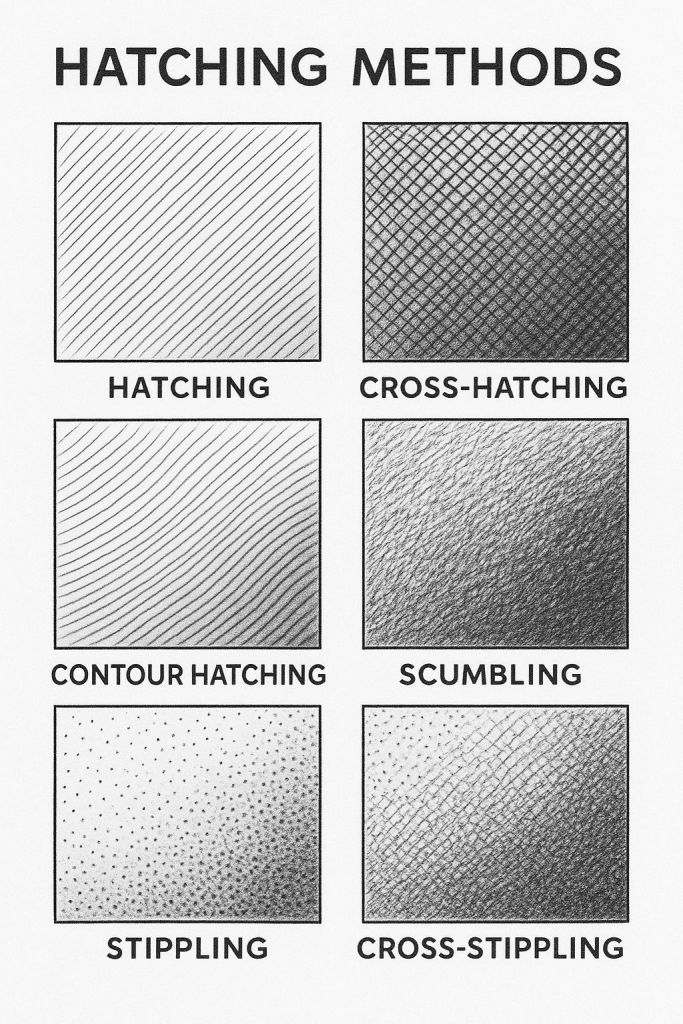
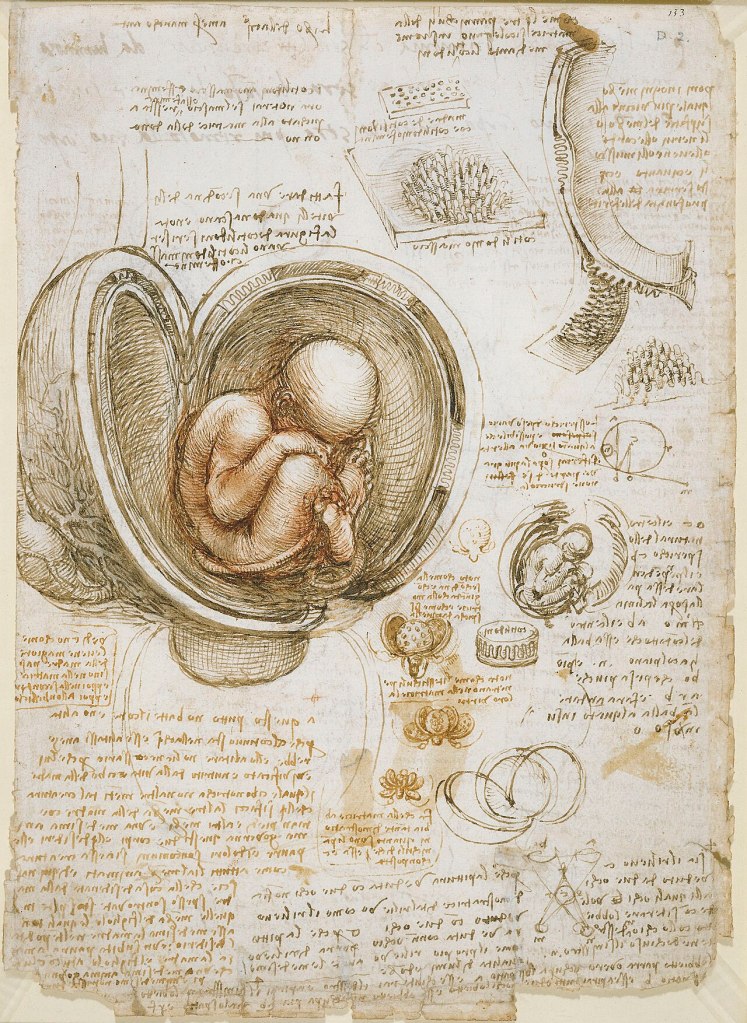
Because there is darkness, we can perceive light. Because there are shadows, we can understand volume. Take Leonardo da Vinci’s drawings, for example. You’ll notice that almost every line serves one fundamental purpose: to describe reality as accurately as possible. Michelangelo. Raphael. Albrecht Dürer. For centuries, European artists continued to refine this visual system. For four or five hundred years, the development of Western drawing revolved largely around one central question:
How can we make a two-dimensional image look more like the real world?
But in the nineteenth century, a technological revolution changed everything.
In 1839, photography emerged. For the first time, human beings had a tool that could record reality faster and, in many ways, more accurately than painting. And once a machine could take over the job of recording reality, painting was forced to confront a completely new question: If painting no longer has to document the world, then what else can it do? And so, an unprecedented artistic revolution began.
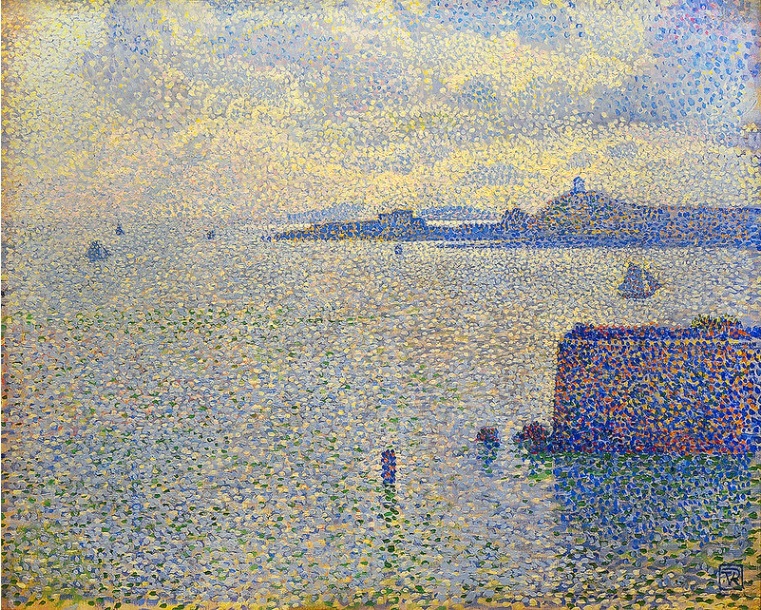
The Impressionists began painting sensations and fleeting impressions. The Pointillists began investigating the science and perception of color. And the Post-Impressionists pushed even further, exploring the artist’s inner world — emotion, psychology, and subjective experience. Painting was no longer simply about reproducing objects and light. It began to create worlds of its own.
And this is the world into which Van Gogh emerged. Many people believe that Van Gogh’s greatness lies primarily in his use of color. But I would argue that what truly changed the history of art was something else: his lines.
For Leonardo da Vinci, the primary purpose of a line was to describe form and volume. But in Van Gogh’s hands, the line seemed to come alive. His lines were no longer simply telling us what an object looked like. They began to express wind, air, movement, and rhythm. They could show movement within a seemingly still image. They could express the rhythm of wheat fields, the movement of clouds, and the restless energy of cypress trees. Look at the wheat in Van Gogh’s fields. The stalks seem to bend and sway in the direction of the wind. His cypress trees rise toward the sky like flames. The clouds seem to spiral endlessly. And the stars appear almost as if they are moving through the night sky. Van Gogh’s hatching was far from regular. But it was full of rhythm. His lines were not trying to be perfectly precise. Yet they possessed an extraordinary sense of life. When we look at a completely still image, we can somehow feel movement. And I think this is one of Van Gogh’s greatest achievements.
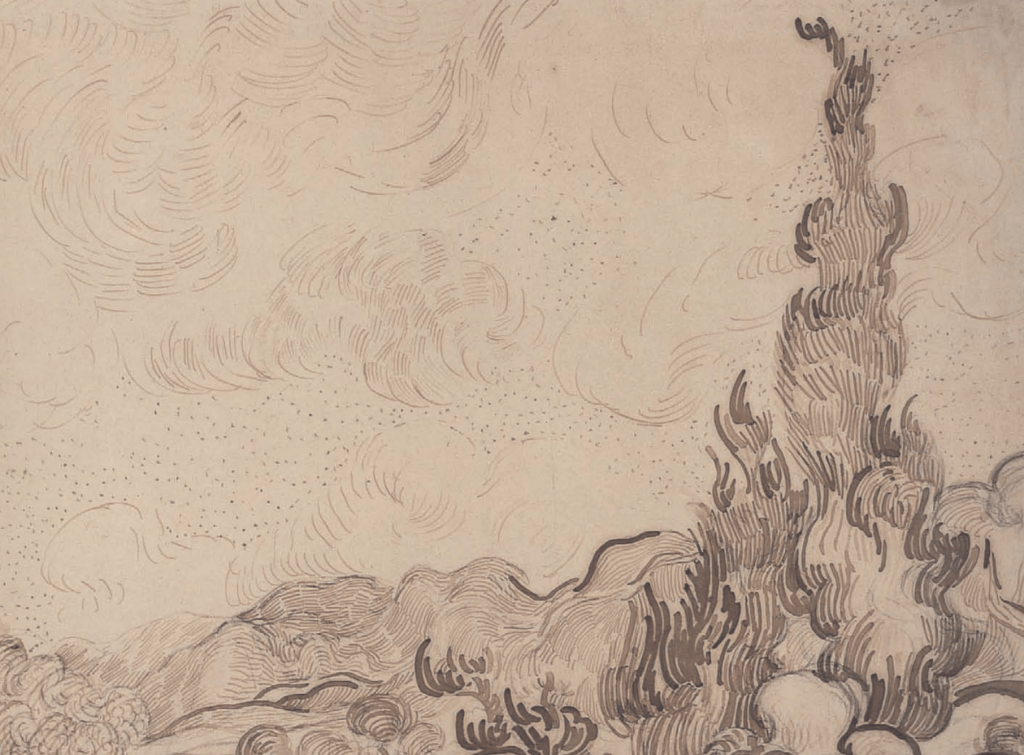
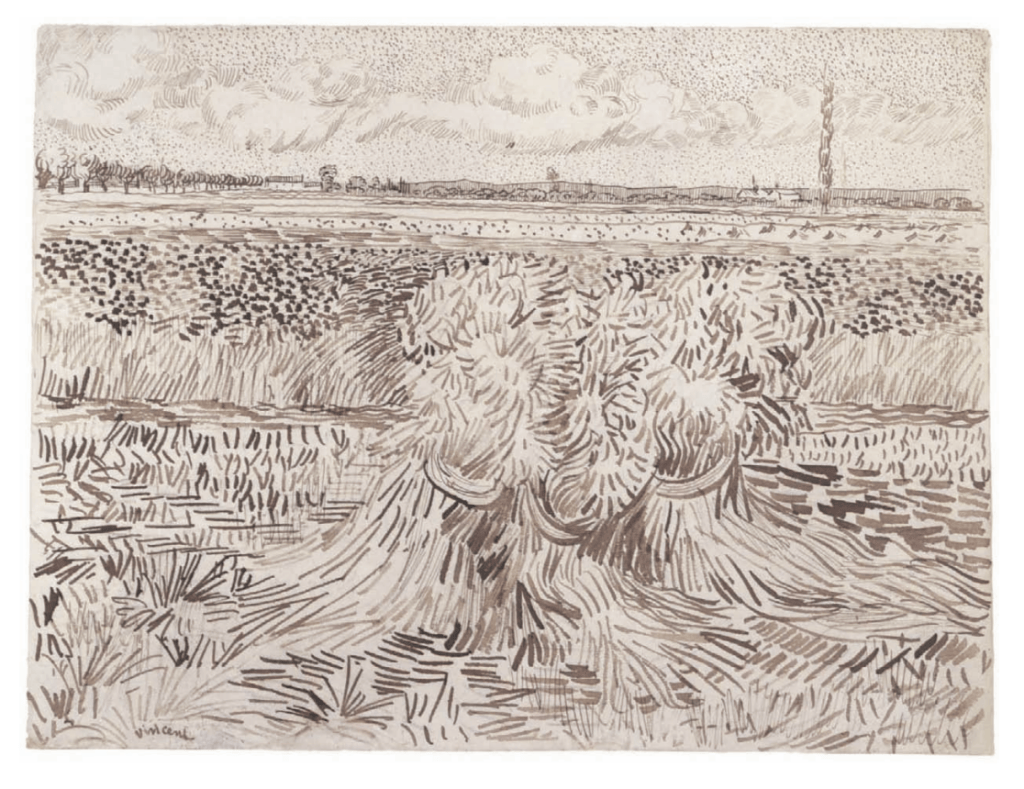
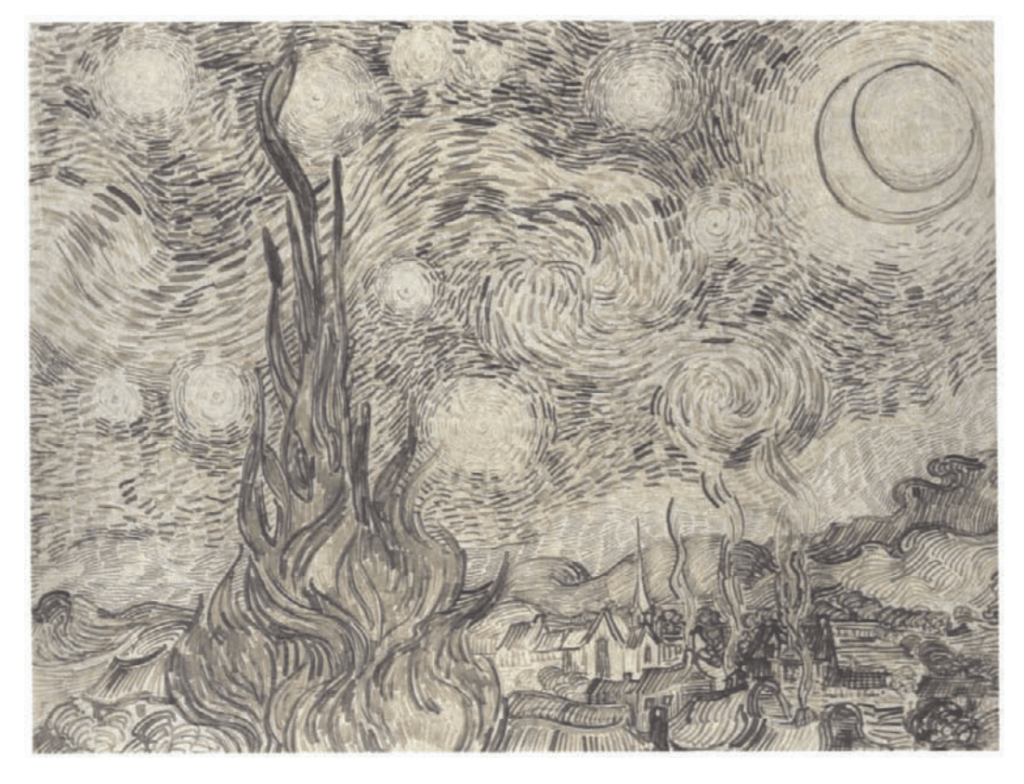
He did not treat the line simply as a tool for representing reality. He transformed it into a visual language for expressing emotion and vitality.
This idea would go on to have a profound influence on twentieth-century Expressionism, modern art, and generations of artists and illustrators that followed.
So here comes the question: How should we learn to draw today?
If your only goal is to make your drawings look more and more realistic, then what you are learning is essentially a system that Renaissance artists had already spent centuries developing. And those fundamentals are absolutely important. They train your powers of observation. They develop your understanding of form. They teach you how to understand space, proportion, light, and volume. But if the ultimate goal of drawing is simply to make something look “correct,” then drawing will always remain primarily a technical skill.
What is truly worth learning from Van Gogh is something else. Every line can become a language. Every brushstroke can express an emotion. And every new way of making art can open up a new way of seeing the world. So, the next time we pick up a pencil, perhaps we should ask ourselves a different question:
Besides making my drawing look more realistic, can I make it feel more alive? Can I create a visual language of my own?Can I make something that allows the world to be expressed in a way that did not exist before?
Perhaps this is the real drawing lesson Van Gogh left us. Not simply how to draw what we see, but how to use drawing to show how we see.
 Miss Daisy Drawing
Leave a comment