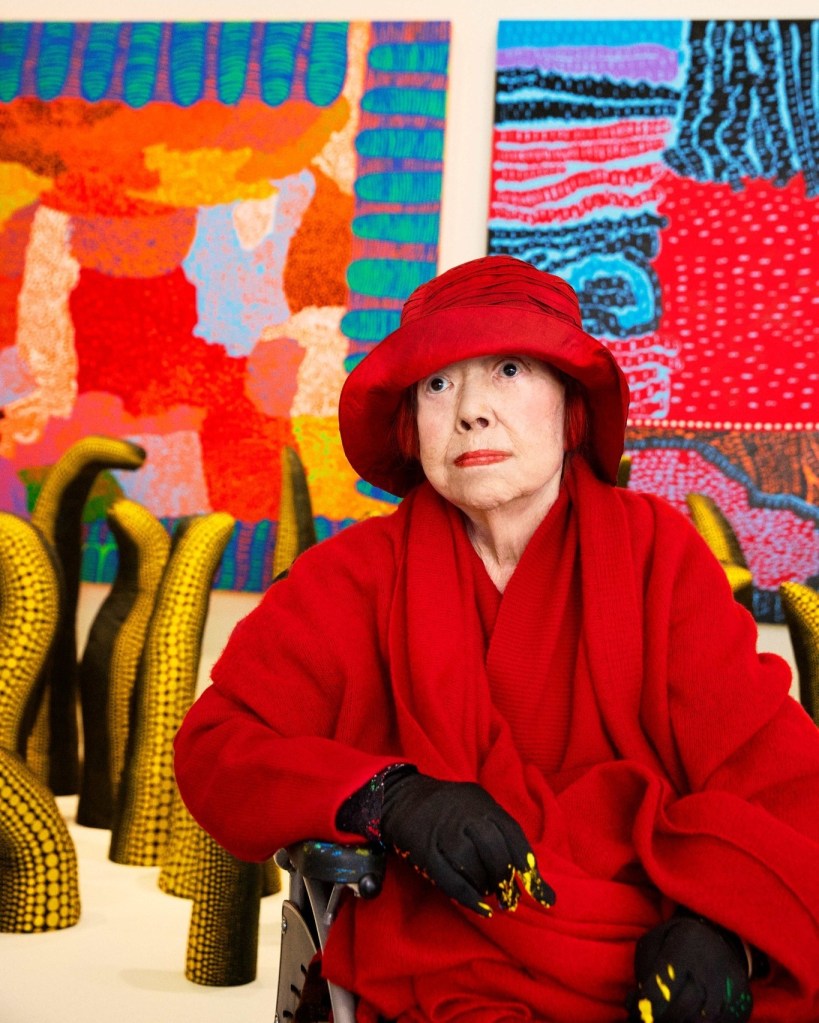
Yayoi Kusama the queen of art who built an entire visual language around the humble “polka dot” passed away on August 14 at the age of 97. Her death has prompted news outlets and art lovers around the world to look back once again on her extraordinary and often turbulent life.
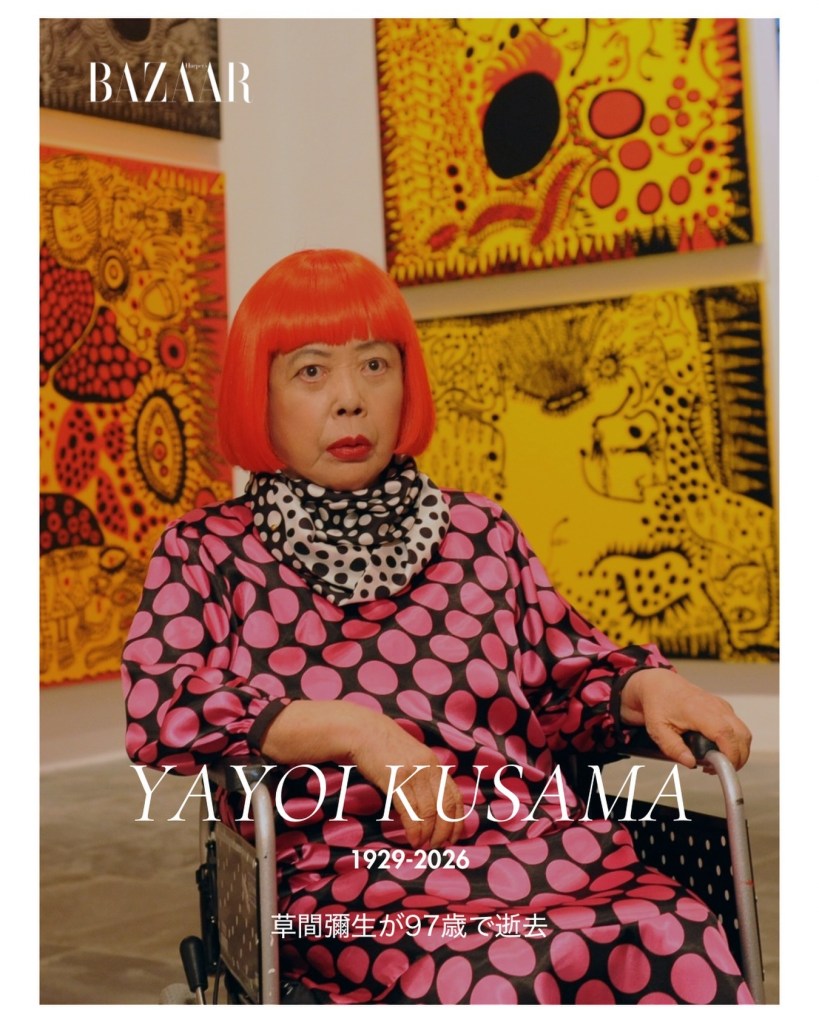
Some people might wonder: “How can an artist use the same visual element for decades? It’s just dots, repeated over and over again. Why has Yayoi Kusama’s work received so much attention around the world?” In this article, we’re going to explore Kusama’s life and her art—and ask a bigger question:
How did a young woman from Japan manage to enter the white male-dominated New York art scene and eventually build an artistic empire of her own?
Kusama’s art cannot be separated from her life experiences. Yayoi Kusama was born in 1929 in Matsumoto, Nagano Prefecture, Japan. Financially, her family was relatively wealthy and well-established in the local community. But her family life was far from happy. Her father was frequently unfaithful, while her mother was highly controlling and strict with both the family and her children. At one point, her mother even sent the young Yayoi to spy on her father and report on his relationships with other women. These experiences became some of the most painful memories of Kusama’s childhood.
Kusama later recalled that her mother did not support her artistic ambitions. She considered painting a waste of time and something that had no practical value. Even more painfully, her mother would sometimes tear up her artwork.
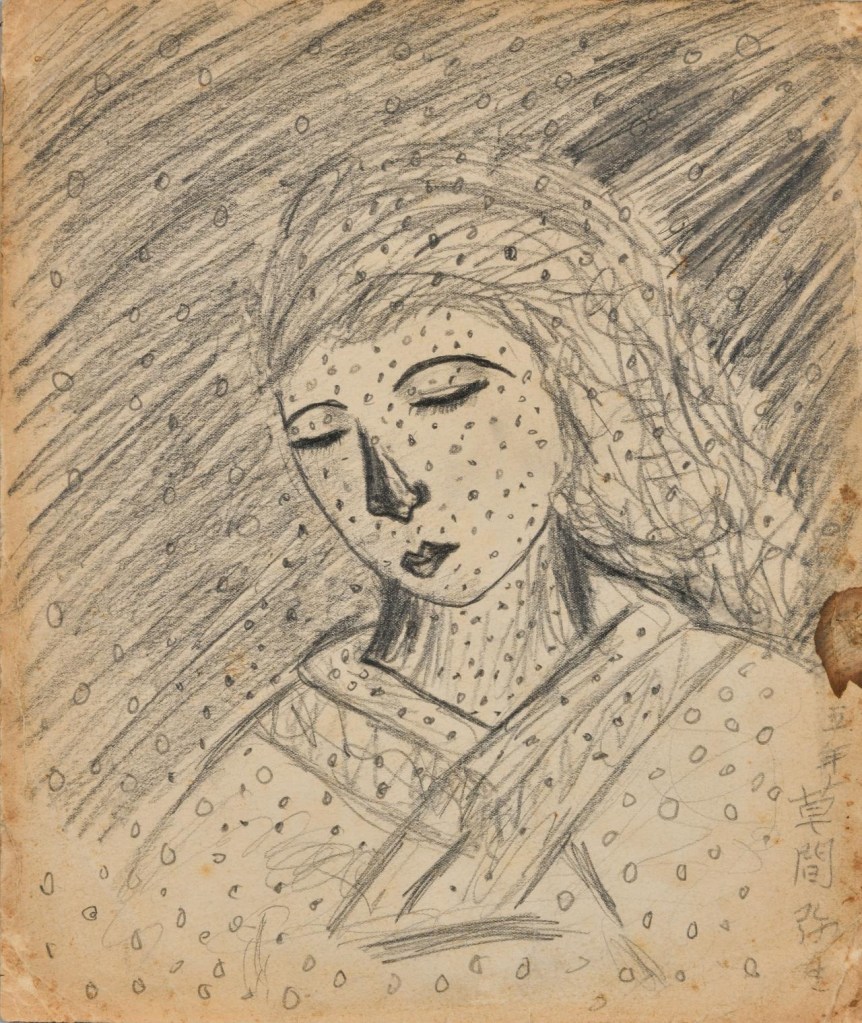
In 1957, at the age of 28, Kusama obtained a visa to travel to the United States. Her mother gave her one million yen and told her never to come back home.
So Kusama’s decision to go to America was not simply about “pursuing her artistic dream.” In some ways, it was also an escape from her family.
Encouraged by the American modernist artist Georgia O’Keeffe, Kusama dreamed of going to New York, which had become the new center of the international art world after World War II.
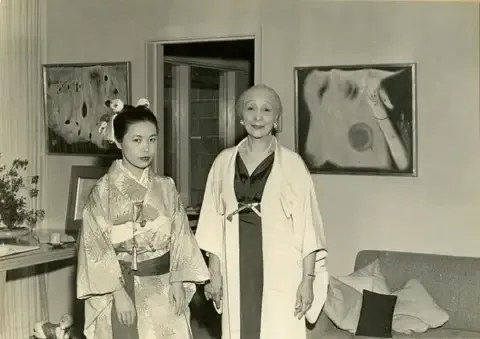
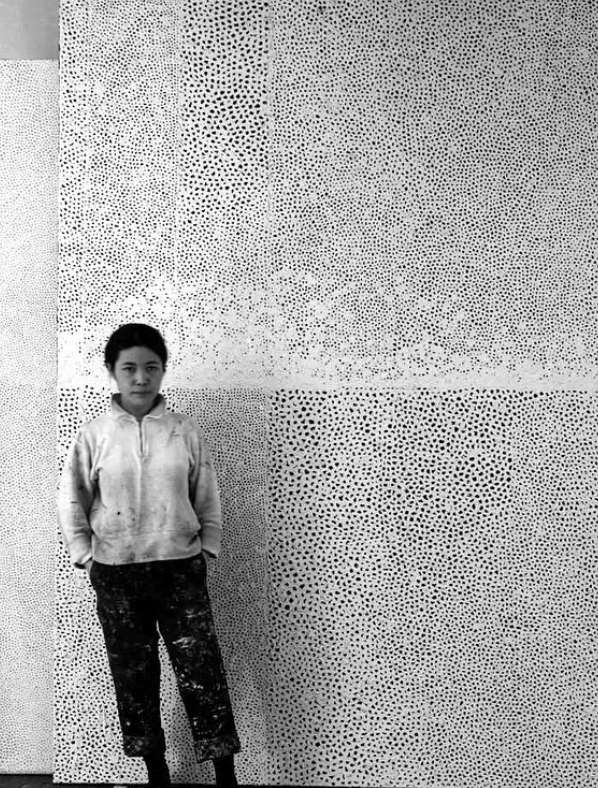
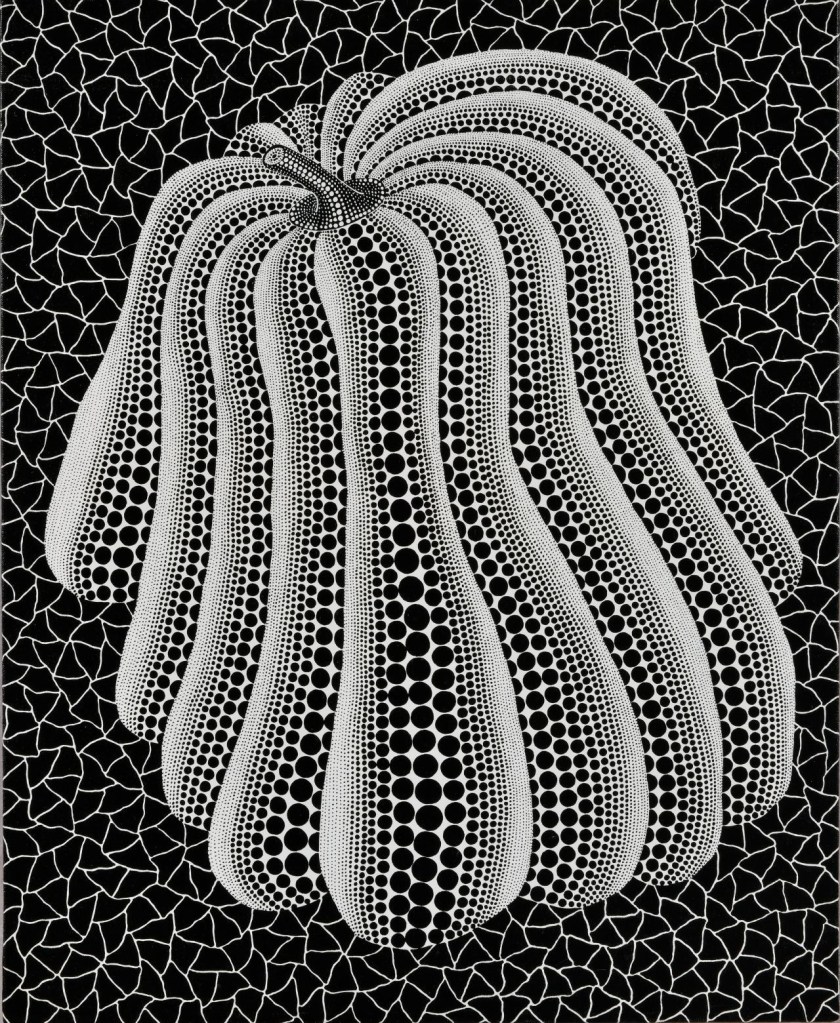
When Kusama arrived in New York, she had to deal with financial hardship, cultural differences, and fierce competition within the art world. At the time, American critics and dealers were heavily promoting Abstract Expressionism, particularly artists such as Jackson Pollock. But Kusama refused to simply follow the dominant trend. Instead, she began creating what would become known as her Infinity Nets. In 1959, Kusama held a solo exhibition at the Brata Gallery in New York, where she presented enormous black-and-white Infinity Net paintings. At first glance, these paintings seem incredibly simple.
There are no figures. No landscapes. No traditional composition in the conventional sense. Kusama repeatedly painted tiny arcs, connecting one to another until they covered the entire surface of the canvas. There was no obvious center. Through countless repetitions, the entire painting seemed to transform into something infinite.
As Kusama’s reputation grew, her work gradually expanded beyond painting into sculpture and installation. She also became acquainted with artists such as Donald Judd and Andy Warhol, establishing herself as one of the most active avant-garde artists of the period. Many of Kusama’s ideas were remarkably radical for their time. Throughout the 1960s, she explored concepts such as repetition, consumerism, the body, installation, and public space. And many of these ideas were later adopted—or, according to Kusama, copied—by other artists.
Andy Warhol’s 1966 Cow Wallpaper, for example, has often been discussed in relation to Kusama’s 1963 installation Aggregation: One Thousand Boats Show. Lucas Samaras also created work closely following Kusama’s exploration of mirrored environments, which would become associated with her famous Infinity Mirror Rooms.
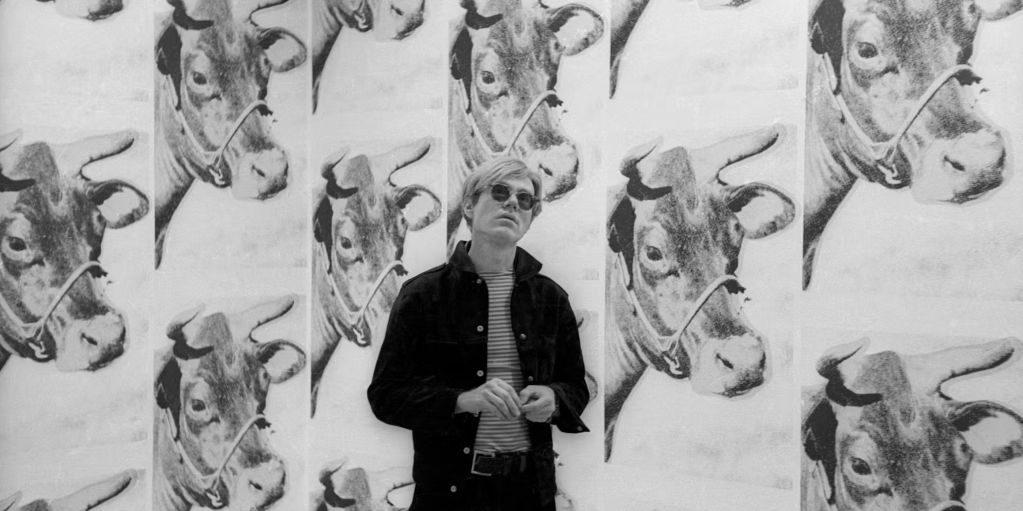
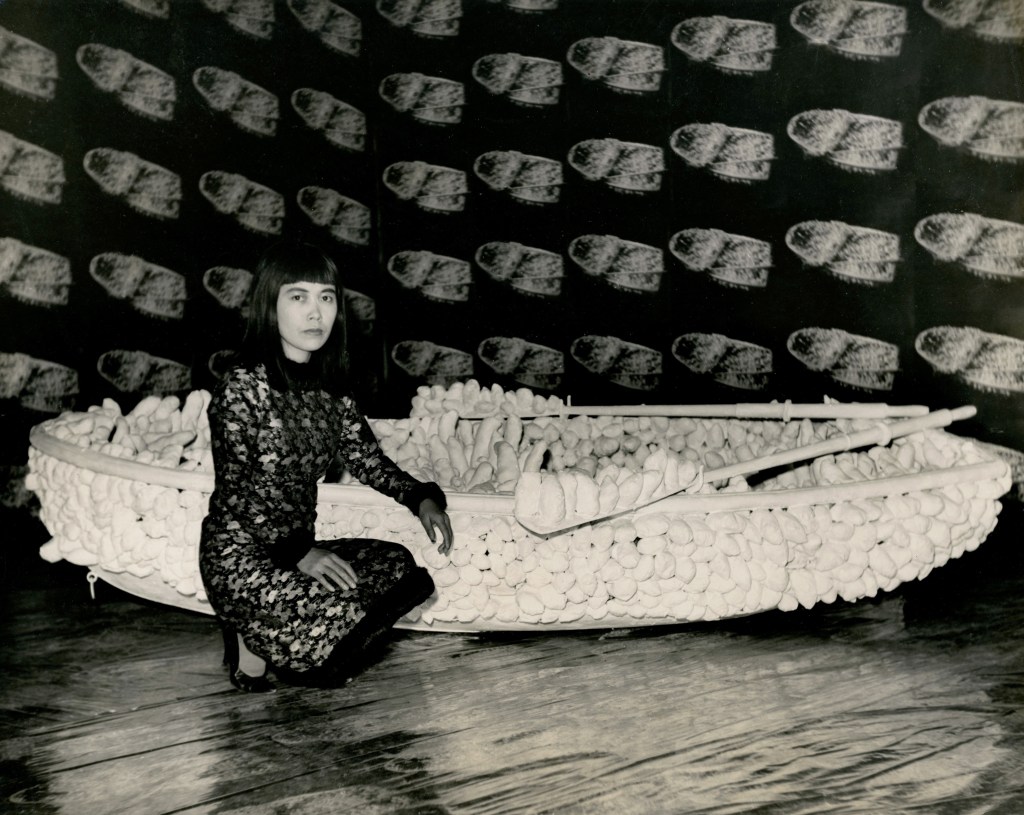
For Kusama, being copied was particularly painful. As a female Asian artist working in a foreign country, she watched white male artists gain fame and make enormous amounts of money, while she herself was struggling financially and receiving little recognition. Being marginalized and seeing her ideas adopted by others left her deeply frustrated. At one point, she even attempted suicide by jumping from a window. Kusama was confronting two forms of discrimination at the same time: racism and sexism.
By the early 1970s, both her financial situation and her mental health had become increasingly unstable. She returned to Japan in 1973. In 1977, she voluntarily admitted herself to a psychiatric hospital in Tokyo, where she chose to live, while continuing to work in a nearby studio.
For Kusama, New York was never simply a “success story.” It was perhaps the most intense and turbulent period of her life as an artist. She had gone from being a young woman from a provincial Japanese city, with almost no connections to the international art world, to becoming part of New York’s avant-garde scene. And she gradually transformed from a young painter making “Infinity Nets” into an internationally recognized artist working across painting, sculpture, installation, performance, film, fashion, and literature.
So, why dots?
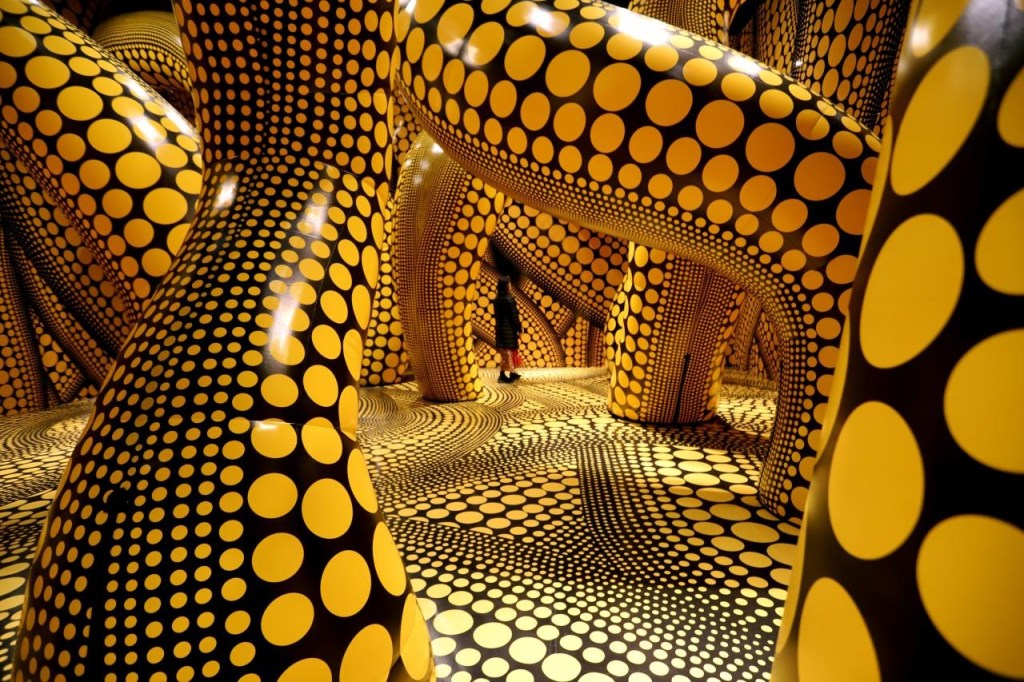
When we return to Kusama’s artistic language, it may actually be more accurate to say that Kusama did not choose the dots—the dots chose Kusama. When she was a child, Kusama experienced vivid visual phenomena, including dots, nets, halos, and other distorted patterns.
Later in life, she spoke publicly about living with obsessive-compulsive disorder, or OCD, and described experiencing intense repetitive thoughts and behaviors. The repetition, dots, nets, mirrors, and seemingly endless patterns that appear throughout her work were therefore not simply aesthetic choices. They were, in many ways, representations of the world as she experienced it.
Remember when we talked about how Vincent van Gogh transformed the line in drawing? He took lines beyond simply describing light, shadow, and volume, and used them to express the movement of wind, clouds, and trees. By applying oil paint directly onto the canvas, Van Gogh developed a physical, expressive approach to painting that would later become associated with thick impasto.
Modern artists are not only creating new subjects. They are also inventing new ways of making art.
Kusama could have allowed her unique experiences and ways of seeing to become a source of suffering. Instead, she transformed those experiences through painting and installation, inviting us into her world.
As an artist who crossed generations—from modernism into postmodernism—Kusama was not simply influenced by the radical avant-garde movements of the West. She also influenced the development of Western art through her own deeply personal experience and unique way of seeing. She added a new visual language and a new way of creating art to the world’s artistic heritage. And perhaps that is why one comment beneath an article mourning her death feels so fitting: “From now on, there are polka dots in heaven.”
 Miss Daisy Drawing
Leave a comment